
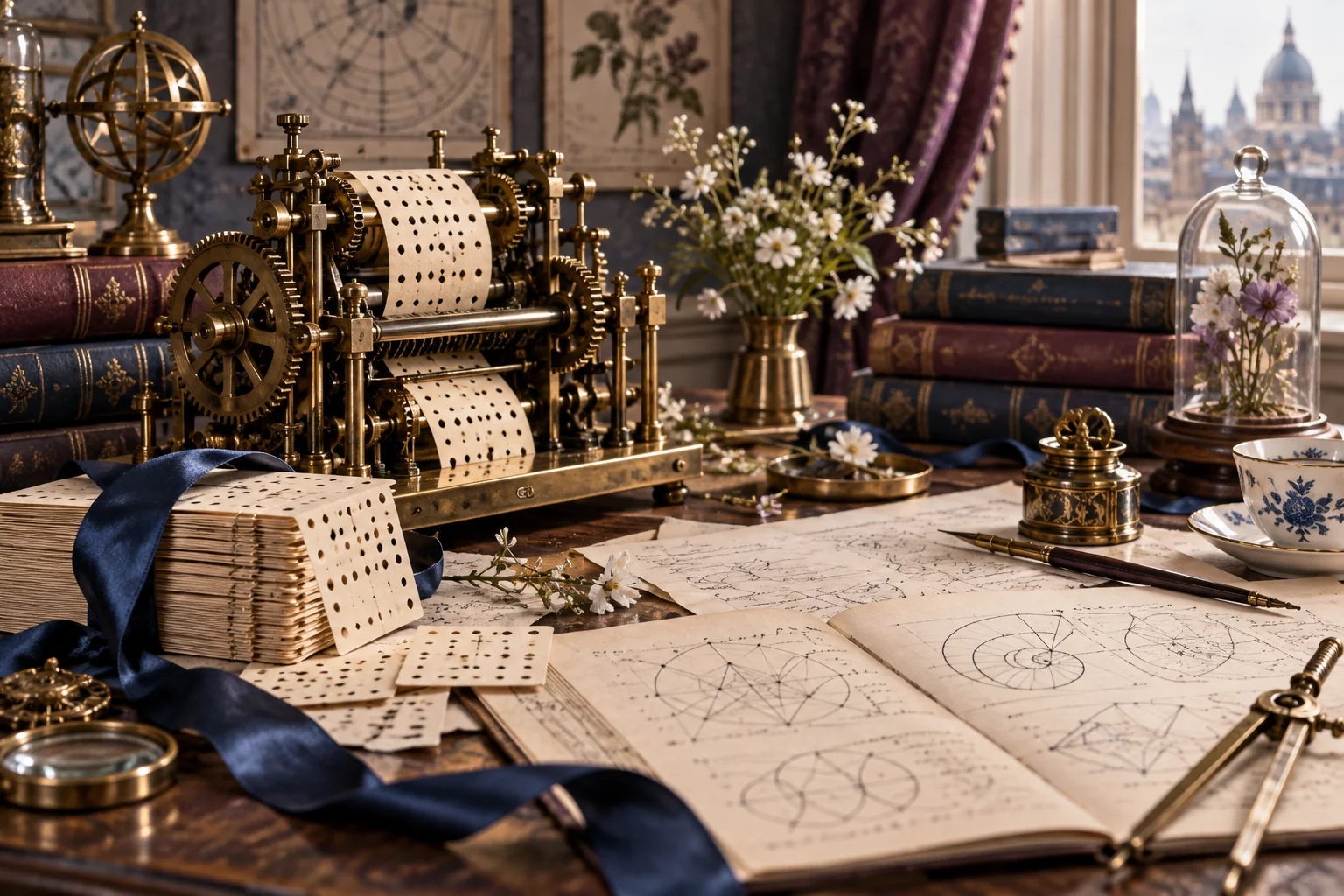
Ada Lovelace was born on 10 December 1815 in London. Her name is now closely connected with the early history of computing, although the machines she studied belonged to a nineteenth-century world of brass gears, mechanical calculation and ambitious designs.
Mathematics met a new kind of machine
As a young woman, Lovelace met inventor Charles Babbage and studied his plans for calculating engines. Her notes on a description of Babbage’s proposed Analytical Engine included a method for calculating Bernoulli numbers. They also considered a larger idea: a machine manipulating symbols according to rules, reaching beyond ordinary arithmetic.
Why imagination belongs in technical history
The Science Museum marks her birth on 10 December 1815 and describes her deep interest in mathematics and science. Lovelace’s legacy resonates because she combined close technical study with questions about future possibility. Innovation needs both.
Use the birthday to widen the story
On 10 December, explore an original manuscript image, a museum account or the history of another early computing contributor. Notice how scientific ideas develop through correspondence, translation, collaboration and unfinished machines, not only through modern devices.
A custom annual date can keep one new name or source beside Lovelace’s birthday each year. Remembering the date is a beginning; following the thread is where history becomes interesting.