
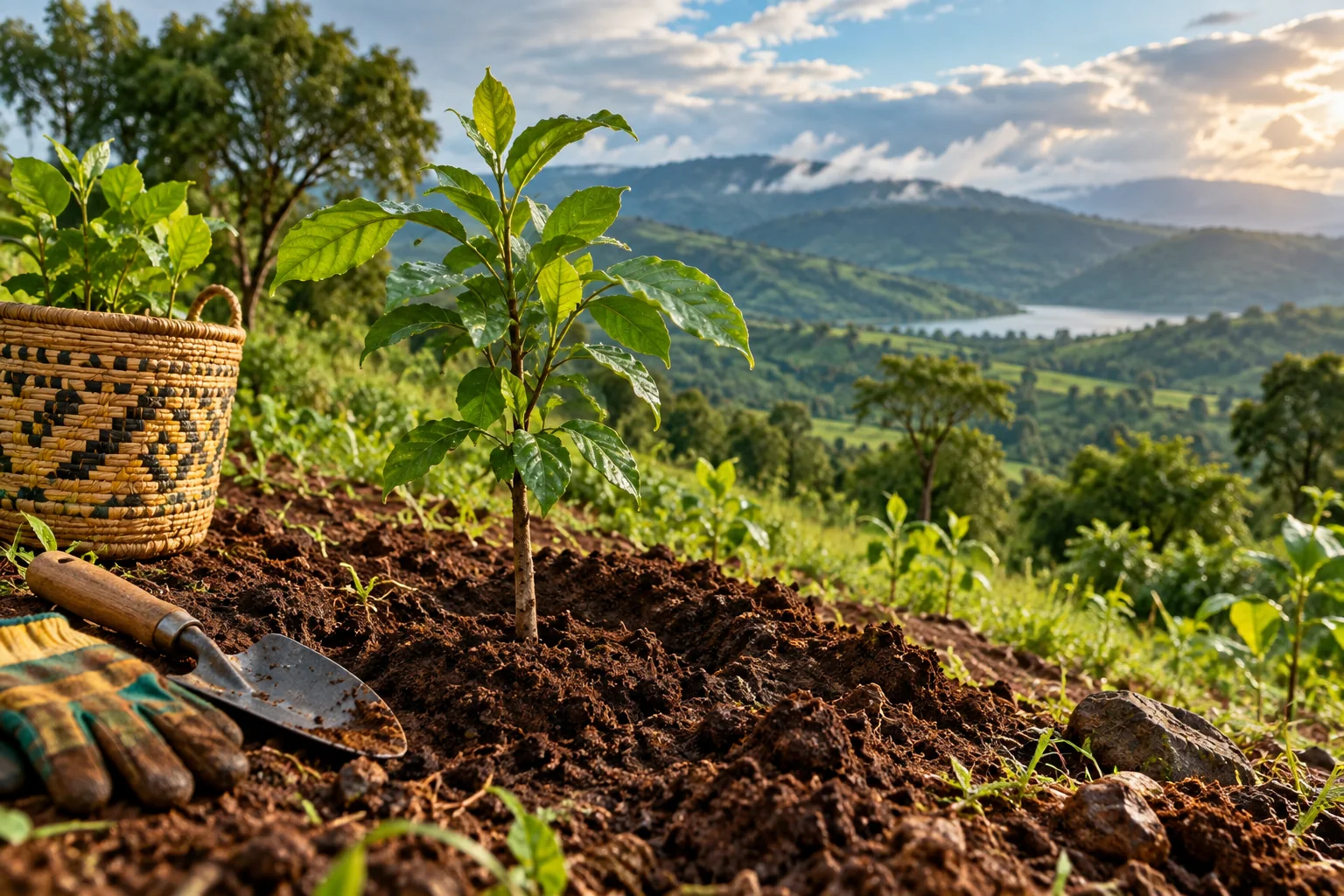
Wangari Muta Maathai was born on 1 April 1940 in Nyeri, Kenya. A biologist, organiser and public leader, she showed how caring for land could also support livelihoods, women’s agency, democracy and peace.
A movement grew from practical work
Maathai began the Green Belt Movement in 1977. Communities, especially groups of women, planted trees to respond to deforestation and the daily consequences of degraded land. The Nobel Prize describes how the movement expanded and why her environmental work belonged within a wider vision of rights and democratic participation.
Her Peace Prize widened the picture
In 2004, Maathai became the first African woman to receive the Nobel Peace Prize. The award recognised her contribution to sustainable development, democracy and peace. It made visible a connection that remains important: environmental health is tied to people’s safety, choices and future.
Choose an action that can take root
A birthday tribute need not imitate a lifetime. Learn which plants belong in your area, support a community growing project or care consistently for one shared patch of land. Planting without local knowledge can cause problems, so seek guidance and think beyond the photograph to long-term care.
Keep 1 April as a yearly reminder with one practical action. Hope becomes more credible when it has roots, neighbours and time to grow.